Thursday, January 25, 2024

1 Nephi 11-15

Perhaps one of the greatest deterrents to effective scripture study is the pattern of reading verses in the same order, focusing on the same insights, and asking the same questions. When I have considered a different perspective in scripture study, I have nearly always discovered new insights, almost as though supplemental verses had been added since my last reading. I found myself asking questions I had not considered and seeing connections I had not recognized. Camille Fronk Olson

https://scholarsarchive.byu.edu/cgi/viewcontent.cgi?article=1252&context=jbms

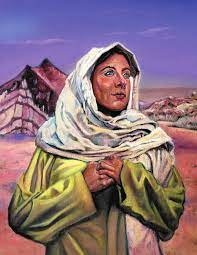
1 Nephi 11:1 - "Here, both Mary and Nephi join a very short list of people in our scriptures who we’re explicitly told, “pondered in their hearts." Adam Miller, Seven Gospels.

1 Nephi 11:8-9, 13-15 - What do you make of the fact that verses 13 and 15 describe the virgin in the same language used in verses 8–9 to describe the tree?

“The goddess Asherah, worshipped among Israel's Canaanite neighbors as the wife of the supreme god, El, was also revered by many Israelites as the consort of El(ohim) and the (in some accounts, virginal) mother of his children. She was symbolized by a tree, and, in fact, a representation of such a tree stood within the temple at Jerusalem during the time of Lehi.

An early Hebrew like Nephi, however, would immediately have understood the representation, by a tree, of a virginal mother of a divine son.”
Daniel Peterson 

The notion of a divine mother goddess strongly resonates with Latter-day Saint belief in a Heavenly Mother. While Mary is not to be identified as Heavenly Mother, the ancient Israelite and Egyptian cultural backgrounds shed light on Nephi’s vision and how he made sense of imagery. 

"People everywhere can appreciate the beautiful force and effect of Nephi’s revelation. Samuel Zinner, a non-LDS scholar of Enoch studies, has remarked that the symbolism in Nephi’s vision, “implies a theological … continuity between the tree of life, Lady Jerusalem, Lady Nazareth, and the Virgin Mary. These are all ultimately specializations or refractions of Asherah.” Margaret Barker, another non-LDS Old Testament scholar, has marveled that Nephi’s vision “is the Heavenly Mother, represented by the tree of life, and then Mary and her Son on earth. This revelation to Joseph Smith was the ancient Wisdom symbolism, intact, and almost certainly as it was known in 600 BCE.” 

First, Nephi tells us that the tree of life is exceedingly beautiful, white, and precious above all. And then Nephi tells us that Mary is exceedingly beautiful, white, and fair above all. In sum, Nephi is shown the tree of life and then, when he asks for the interpretation of the tree, he’s shown Mary. What is the meaning of the tree of life Or, better, who is the meaning of the tree of life? 

While the tree of life is a powerful symbol with a complex history and many possible meanings, it seems to me that, in this instance at least, Mary is herself among the possible meanings of the tree. Here, Mary is linked with the tree of life. And as “the mother of the Son of God,” she will bear in her womb—and in her arms (and on her hip)—the fruit of that tree, the man who will, after the manner of her flesh, descend from heaven to be with us and heal us and save us. 

We might, then, offer the following reading. Mary is the tree of life. The tree of life is the love of God. The fruit of that tree is the Son of God. And this chain of carefully forged links describes the condescension of God.
Adam Miller, Seven Gospels, pages 22-23

Iron Rod - 1 Nephi 11:25 & 1 Nephi 15:23, 24
Is there more than one meaning of the iron rod? Holding the rod is individual and communal —lift and carry and hold the rod together - covenants.


Sarah Winegar, Rod of Hands and Feet, 2020. The Book of Mormon Art Catalog.
“Nephi learned the meaning of the dream when he saw a mother and her child. Likewise, it is through loving relationships that a child comes to know the meaning of the love of God. The rod that leads us home is one made of flesh, not iron.” Sarah Winegar.

Condescension
Q: What does the word condescending mean in the Bible? 1 Nephi 11:16–17
When Nephi responded to the angel that he did “not know the meaning of all things,” the angel proceeded to show Nephi “the condescension of God” (1 Nephi 11:16–17). When the Book of Mormon was translated, the English word condescension meant “voluntary descent from rank, dignity . . . submission to inferiors in granting requests or performing acts which strict justice does not require.” Nephi was shown how the Savior voluntarily descended from His position of superior dignity, submitted to the will of His Father as well as the designs of evil men, and performed merciful acts for the benefit of all people.

Adam Miller: "In our scriptures, Nephi is the only person with whom an angel uses the term “condescension” to narrate the meaning of Christ’s atoning work. To talk about the condescension of God is to talk about God’s coming down to be with us. As another angel tells Mary’s Joseph: “And they shall call his name Emmanuel, which being interpreted is, God with us” (Matthew 1:23). This is how he saves us, by being with us." Seven Gospels.

President Emily Belle Freeman: “His is a mission of condescension. Jesus Christ will meet us where we are as we are. This is the why of the garden, the cross, and the tomb. The Savior was sent to help us overcome. But staying where we are won’t bring the deliverance we seek. Just as He didn’t leave Jacob there in the dirt, the Lord doesn’t intend to leave any of us where we are.”
https://www.churchofjesuschrist.org/study/general-conference/2023/10/42freeman?lang=eng


Thursday, January 18, 2024

1 Nephi 6-10

FOUR QUESTIONS

What do you notice? 

What does it mean? 

Why is it important? 

What will you do now?

THE TREE OF LIFE

“Trees in the ancient world often had this symbolic sense of importance, and the tree of life was very, very ubiquitous in the ancient world, and there are lots of ways to understand it, but a tree was symbolic of a conduit between the earth, the underworld, and the heavens. So it was often seen as something like an axis mundi; a place where all three spheres can be connected in some way.

Trees or a tree of life is often associated with temples, and we see them there all of the time. That's a really nice image of connecting heaven with earth and the underworld as well, the living on earth, the dead, and the heavens, so this connection is conduit between them. In the Hebrew temple, this tree of life is symbolized by the menorah that was in the holy place. So this is a very prominent symbol, and it's often associated with this idea of life, an eternal life, and the opportunity for people to receive that, which works really nicely here given ultimately what we see.”

Dr. Gaye Strathearn, Follow Him Podcast

TREE OF LIFE

“Note that the tree stands alone. It has no competition. The tree of good and evil has ceased to exist because the inhabitants of the city, knowing good from evil, have spurned all evil and eternally choose the good. In consequence the cherubim have been removed allowing God’s people to eat freely of the fruit. Jewish thought looked forward to the time when men would be free to partake of the wondrous tree.

John conveys the idea that the tree does not follow the normal course of budding, fruit setting, and ripening, with one harvest a year. The crops grow continually. The entire image expresses the absolute triumph over death. The very leaves of the trees hold healing properties. Where it stands, not a single blade of sorrow or pain can be found. All nations are healed, that is, made whole and complete, through the power of the tree.”

Opening the Seven Seals, Richard Draper, pg 242

 MESSIAH, A SAVIOR OF THE WORLD

“For many people in Lehi’s day as well as in Jesus’s day, the idea of such a messiah was a stumbling block on which many people faltered. This concept was the foundation stone that some builders rejected. While ancient audiences could easily accept the use of the term messiah to describe a leader or holy person in their midst, it seemed inappropriate, if not blasphemous, to think that a future anointed person would become an absolute messiah, even, as Lehi said at the end of his life, ‘the true Messiah, their Redeemer, and their God.’ Due to the persistent range of answers to the timeless question, ‘Who say men that I am?’ this bold testimony and clarification is needed no less today than it was in Lehi’s day.

Book of Mormon prophets, particularly Nephi, spoke often of Jesus as the Messiah, the one ‘full of grace and truth' through whom redemption for all of God’s children would come. The Book of Mormon thus acts as a crucial second witness next to the New Testament that Jesus is in fact the Messiah, the one God anointed with power and authority to fulfill an infinite atonement.”

https://knowhy.bookofmormoncentral.org/knowhy/why-did-nephi-clarify-that-the-messiah-was-the-savior-of-the-world


Thursday, January 11, 2024

1 Nephi 1–5

 “I believe that God has spoken to people throughout history in different ways and different faith traditions, but the Book of Mormon is special. Over the course of my lifetime, this scripture has shaped my identity, engaged me intellectually and spiritually, sustained my faith, inspired me to be a better person, and, I hope, brought me closer to Christ. I believe the Book of Mormon is a gift from God, a revealed translation of a record written by ancient American prophets. I regard the Book of Mormon as both sacred and authoritative, so much so that all my editor’s royalties from this volume will be donated to the Humanitarian Aid Fund of the LDS Church, in accordance with Moroni’s injunction to give priority to “the poor and the needy, the sick and the afflicted” (Morm 8.37). I expect someday to stand in the presence of God, along with Nephi and Moroni (2 Ne 33.11; Moro 10.27, 34), where I will be judged, at least in part, by how I have treated this text. Whether the Book of Mormon had its origin in revelation, inspiration, or creative genius, it became a world scripture because it spoke to the religious desires and concerns of many of its first readers, that is, biblically literate English-speaking Christians in the early nineteenth century. It still speaks to millions of people, across the globe, today.” Grant Hardy, The Annotated Book of Mormon. Editor’s Preface, page XI.

The small plates of Nephi - The first six books in the Book of Mormon — Timeframe about 600 years BC

Nephi makes it clear from the first verse of his account that he was grateful to both of his parents for his upbringing. “I, Nephi, having been born of goodly parents, therefore I was taught somewhat in all the learning of my father” (1 Nephi 1:1). 

His education was given to him by these “goodly parents,” righteous and devoted people who had taken the time to teach him reading, writing, the language of the scriptures, and the learning of his father.  Webster’s 1828 dictionary - goodly = beautiful or agreeable rather than simply good. It could also mean godly parents.

But the implication of Nephi’s statement is even deeper than that. He also refers to an inherited spiritual knowledge and a familiarity with religion and the God whom his parents worshipped. 

Grant Hardy and other scholars state that Nephi is writing as a middle-aged man—about 30 years after leaving Jerusalem.

Book of Mormon Central: Many ancient Near Eastern texts begin this way, and these texts help explain why Nephi would start his record the same way. By the time he wrote this, he had become a king and a prophet over his people.

Reminder about beginnings and endings:

Lehi, Sariah, and family - ending and beginning - witnessing the end of their world

“Given that there is no end to God’s work and glory, his creative work may never conclude. In this case, the world will only continue to grow from one grace and glory to the next—with the flip side being that, for as long as God continues to re/create the world, the world will also continue to end. Every new act of creation will, at minimum, impose itself as the partial loss of what came before. Every new world will unfold, inescapably, as the passing away of the old. We will always find ourselves, at least in part, in the same position as Mormon: witnesses to the end of the world.” Adam Miller - Mormon

Laban’s Murder


Jack Welch:

(1) State of mind—did the killer “lie in wait,” or “come presumptuously” with murderous intent?

(2) The role of divine will—did “God deliver him into his hand” (Exodus 21:12–14)

 “The occasion presented itself spontaneously. Nephi was completely surprised to find Laban. His deed was not preplanned and, therefore, not culpable.”

Grant Hardy: Nephi’s killing of Laban is a troubling episode. Various legal and moral justifications have been put forward, including some by Nephi himself, but Nephi’s extended narration suggests that he was still uncomfortable with his actions when he wrote this account many years later. The fact that the Brass Plates were obtained through faith, sacrifice, and violence is a constant reminder to the family of their value.

Elder Jeffrey R. Holland - As Elder Holland noted, “the narrative is “squarely in the beginning of the book—page 8—where even the most casual reader will see it and must deal with it. It is not intended that either Nephi or we be spared the struggle of this account. I believe that story was placed in the very opening verses of a 531-page book and then told in painfully specific detail in order to focus every reader of that record on the absolutely gospel issue of obedience and submission to the communicated will of the Lord. If Nephi cannot yield to this terribly painful command, if he cannot bring himself to obey, then it is entirely probable that he can never succeed or survive in the tasks that lie just ahead.” https://knowhy.bookofmormoncentral.org/knowhy/was-nephis-slaying-of-laban-legal


Sariah: 1 Nephi 5:2-8 - Sariah’s complaint in this verse and her faithful affirmation at v 8 make this one of only four passages in the entire Book of Mormon that feature direct equations spoken by women.  Sariah would have been an active and contributing member and leader of this family — all the women in this book were depended upon for survival as it was on its male members.

Camille Fronk Olson - Sariah left her home in which she would have spent most of her time managing her home and managing the females and female servants. 

A second reason suggesting departure was more difficult for Sariah was that Lehi would have adjusted more easily to full-time tent living than Sariah could have. Hugh Nibley described Lehi as “an expert on caravan travel.” Family members complained about Lehi’s visions but never about his lack of skill in leading and preserving his family in the wilderness. Tradition suggests that women remained at home during caravan runs. One wonders whether Sariah had ever spent time in a tent. Granted, Lehi would have owned a fine tent with accommodations to increase comfort and protection, but even the most luxurious tent would have been a poor substitute for Sariah’s Jerusalem home. 

Third, perhaps more difficult than leaving her house’s comforts and luxuries, Sariah had to leave kinfolk and associations with other women. As the family embarked on its journey, Nephi named Sariah as the sole woman in a cast of “large in stature” men. The implication is that Sariah initially lacked female companionship during a demanding adjustment period. Having another woman to commiserate with and share the burden of increasing demands surely would have bolstered Sariah’s courage and made the going easier. 

Fourth, Nephi gives no indication that his mother received her own personal witness from the Lord of the necessity of fleeing Jerusalem. She had a strong faith and resolve to follow the Lord’s will, respect for her husband, and honor to her marriage covenant. Yes, Sariah obeyed, as did her prophet-husband, leaving behind a beautiful, servant-supported home surrounded by kinfolk and friends to live in a world to which she was unaccustomed. There is no indication that Sariah murmured as she left Jerusalem. She apparently undertook the wilderness trek because a prophet had borne witness that such was the will of God and she trusted that his witness was true. https://scholarsarchive.byu.edu/cgi/viewcontent.cgi?article=1252&context=jbms

Desert Mothers
In addition to their duty to carry, deliver, and nourish children, desert women assumed a daunting list of other responsibilities. They collected water, gathered firewood, churned butter, guarded flocks, prepared meals, spun yarn from which mantles were woven to keep the family warm, braided palm matting that covered tent floors and wove and repaired cords used to secure the tents. Most remarkable, it was considered women’s work to take tents down, load tents and supplies on camels, ensure the security of the children and supplies during transport, and set up tents again when a new campsite was reached. Most tents were made of black goatskins, making them significantly heavy. Camille Fronk Olson. https://scholarsarchive.byu.edu/cgi/viewcontent.cgi?article=1252&context=jbms

Camille Fronk Olson - Insights can be gained by considering the eight-year wilderness sojourn of Lehi’s company through the eyes of the women who were there. Leaving the comforts of civilization for the difficulties of the desert would have been very challenging. While the record in 1 Nephi mentions nine women, Sariah was the only one identified by name. Nephi records Sariah’s struggles as well as her testimony. The record of the women in 1 Nephi communicates much about the need to seek and receive one’s own witness of truth. 

To establish Lehi and his family in a new land where they would inspire and instruct later generations to come unto Christ, God needed more than a father and a son (as successor) to possess a testimony tried in the fire of affliction. God also needed a matriarch, weathered by her own trials of faith and armed with her own unwavering witness, to stand steadfast with her prophet-husband. https://scholarsarchive.byu.edu/cgi/viewcontent.cgi?article=1252&context=jbms


Friday, December 15, 2023

Revelation 6 - 14


Bible Dictionary - Revelation of John - The second part, Rev. 4–22, deals with things yet future for John, things that had not yet come to pass. It begins with John’s time and continues to the end of the world. Note Rev. 4:1: “I will shew thee things which must be hereafter.” Accordingly, it offers a sort of panoramic view of events through the ages—of Apostasy, Restoration, Judgment, and Millennium.


Apostasy and Restoration. Apostasy and Restoration are relatively gradual events. Compare the setting and the rising of the sun. It does not become dark or light all at once (see D&C 45:29)

https://www.churchofjesuschrist.org/study/scriptures/bd/revelation-of-john?lang=eng

New International Version - Revelation is a distinctive type of literature—Revelation is apocalyptic, a kind of writing that is highly symbolic. A distinctive feature is the frequent use of the number seven (52 times). There are seven beatitudes, seven churches, seven spirits, seven golden lamp stands, seven stars, seven seals, seven horns and seven eyes, in last week’s readings. This week we have seven trumpets, seven thunders, seven signs, seven crowns, seven plagues, seven golden bowls. And there will be more groupings in sevens through the end of the book. Symbolically, the number seven stands for completeness.

Thomas Wayment: The book helped shape the identity of a community that felt persecuted, and the life of the faithful as described in the book is one of persecution with a hope in eventual redemption. 

Adam Miller - Mormon, pg. 36, 37
“The world is perpetually passing away because it is, simultaneously, perpetually beginning. The end of the world is ongoing because God’s work of creating the world is ongoing. God not only created the world (in the past tense), he is continually creating the world (in the present tense). New lives and forms of life surge forth and old lives and forms of life pass away, each dependent on the other. 

Given that there is no end to God’s work and glory, his creative work may never conclude. In this case, the world will only continue to grow from one grace and glory to the next—with the flip side being that, for as long as God continues to re/create the world, the world will also continue to end. Every new act of creation will, at minimum, impose itself as the partial loss of what came before. Every new world will unfold, inescapably, as the passing away of the old. We will always find ourselves, at least in part, in the same position as Mormon: witnesses to the end of the world.

Christian discipleship is the work of willingly participating in the re/creation of the world. It’s the work of willingly participating in the world’s passing away. And this willing participation is what consecrates the world’s passing and renders it sacred. A disciple’s job is to continually inherit the new worlds that God is creating (now, today) by continually sacrificing (again) our claims to the old.”

Richard D. Draper - "Teaching the Book of Revelation: Five Considerations"
“As mysterious as the book of Revelation appears, it can be understood and taught with success. There are a number of good Latter-day Saint commentaries that the teacher will find helpful. It is important that the book of Revelation not be skipped because John’s work gives added details on three important subjects. The first and most important is the witness of the nature of our Savior and his work, especially dealing with his role in the last days. The second is the book’s exposure of the great enemies of the last days and their objectives and work. Having this knowledge serves as a warning to the modern Saints and helps them know what to prepare for and what to avoid. The third is a general outline of how history will flow through the millennial era, but especially just before the Second Coming.”

Major Events 
First Seal - The creation and fall of Adam and Eve; the ministry of Enoch and the translation of his city into heaven (Revelation 6:1–2) 

Second Seal -  Noah and the flood (Revelation 6:3–4) 

Third Seal - Ministries of Abraham, Isaac, Jacob, Joseph, and Moses; the Exodus; rule by “judges” (Revelation 6:5–6)

Fourth Seal - Rule by kings; the division of the kingdom; the conquering of the kingdoms (Revelation 6:7–8) 

Fifth Seal - The birth, ministry, crucifixion, and resurrection of Jesus Christ; the establishment of his Church and the ministry of the apostles; martyrdom of the apostles; the apostasy (Revelation 6:9–11) 

Sixth Seal - Continuation of the apostasy; restoration of the gospel through the Prophet Joseph Smith; signs of the times manifest (Revelation 6:12– 17; 7:1–8) 
Our Day: “The Saturday Evening” of Time
Renaissance and Reformation - Industrial Revolution - Joseph Smith’s Ministry - Church Becomes World Church - Saints Prepare for Christ - Great Calamities Worldwide - Zion Fully Established

Seventh Seal - Wars, plagues, and desolation; second coming (Revelation 8:1–19:21) 
The earth is celestialized (Revelation 21:1– 22:6)
The Earth’s Sabbath
Final Destruction - Christ comes to Reign as King of Kings - Earth Receives Paradisiacal Glory - Satan Bound - Millennial Era of Peace and Love - Earth Celestialized at Close of Millennium

The Sixth Seal -  The Earth has a spirit - tagged scriptures
Revelation 6:12 - 17:

The cosmos/universe reacts to men’s sins. 
From Richard Draper: "The cosmos really does react to events on earth, and the earth itself reacts through great convulsions."
Richard D. Draper, Opening the Seven Seals: The Visions of John the Revelator. Page 72.

Q: In verses 16 and 17 - What is the fear?
Wayment: Their fear is not being covered by the white robe (Revelation 3:18)

Revelation 7: 13 - 17 
Living in a fully repentant state - Richard Draper: Millions will prevail during this time of trial because they heeded the warnings and prepared themselves. “In this state, they “serve him day and night in his temple.” They perform ceremonies associated with God’s sanctuary—they serve and are served in return.

“In this light, the most important work for the Saints of the sixth seal is the establishment of Zion by faithfulness, diligence, and especially purity. Missionary work must spread, temple work increase, and righteousness flow out of the homes and into the communities of the Saints. In this way God will have a people “prepared to receive the glory that I have for them, even the glory of Zion” (Doctrine and Covenants 136:31). 
Richard D. Draper, Opening the Seven Seals: The Visions of John the Revelator. Page 88.

Revelation 13
Richard D. Draper - "Teaching the Book of Revelation: Five Considerations"
https://rsc.byu.edu/vol-14-no-1-2013/teaching-book-revelation-five-considerations
"This condition has been carefully orchestrated by the dragon and the land and sea beasts over the ages, and it has now reached full flower. The result is that evil has been able to impose itself on the earth dwellers because of their growing indifference and ambivalence toward the good. They are willing victims of a growing normalization of aberrant behavior. They have been seduced by the ideological sophistry that the false lamb spews through all forms of media—the “image” the inhabitants of the earth willingly created for it (see 13:14). As a result, their love has waxed cold and, along with it, their ability to feel, to sympathize, and to empathize with that which is good. Being touched by nothing, they can be reached by nothing, and therefore saved by nothing, not even the terrible beating of “the army of the horsemen,... having breastplates of fire, and of jacinth, and brimstone,” who killed “the third part of men.” No, they will not choose to repent, for they have been sealed Satan’s.

The real issue in Revelation is one of worship. Taking on the beast’s mark (see Revelation 13:16) does not refer to tattoos or electronic implants. It connotes, rather, spiritual devotion to the beast. Insight into the significance of the mark comes from the fifth-century BC Greek playwright Sophocles, who warned of the charagma echidnēs, that is, “the serpent’s bite,” which was the means by which the snake secreted its poison into a person."

Revelation 14:6 “And I saw another angel fly in the midst of heaven, having the  everlasting gospel to preach . . ." 
Moroni drawing - Brian Kershisnik

Merry Christmas! We look forward to seeing you on Thursday, January 11, 2024. 


Thursday, December 7, 2023

Revelation 1-5

FOLLOW HIM PODCAST 

https://www.youtube.com/watch?v=2Bt8tPSr4hM 

His explanation regarding the history of the Book of Revelation starts at the 6:30 minute mark. 

NUMBERS

“Near Eastern literature, not just Hebrew, reveals a fondness for using numbers to communicate ideas. Why certain numbers became laden with symbolic meaning is unknown; in most cases this arose in prehistoric times and is now lost to us. Interestingly, there is a general consistency across the cultures to the meaning of certain numbers. That is not to say that numbers are never used as numbers. Certainly they mostly signify only literal quantity, however, in certain contexts they express ideas. This is the case in Revelation. One should interpret numbers just as the other symbolic representations. Fortunately, they are used consistently. For example the numbers 4, 7, 12, and 1000 denote aspects of wholeness, or completeness: the first to the world, the second to totality or perfection, the third to priesthood and the last to superlative greatness.”

Richard D. Draper, Opening the Seven Seals, The Vision of John the Revelator

REVELATION

“The Spirit left it up to John to translate what he comprehended into human language, but the vision did not come to him that way. The physical senses were superseded by those of the Spirit. Indeed, Spirit communicated directly with spirit through forms, images, and impression. In this way nothing was lost in the interchange. Unfortunately, John did not have that same privilege when he wrote. He had to use the language of his readers to make plain his testimony. To make up the difference, John used early symbolism through which a weak, yet somewhat effective, understanding of what he grasped may be conveyed.”

Richard D. Draper, Opening the Seven Seals, The Vision of John the Revelator

THE VISION OF THE SON OF MAN

Read Revelation 1:9-20 and consider the following questions.

1. How did the revelation occur? or How was he called to this work?

2. What directions does John receive?

3. What do these vs. teach us about Jesus Christ? What symbols does John use and what do they mean?

4. What descriptors does Christ use about himself to reassure John? What events do these phrases reflect?

PROMISES TO THE ONE WHO CONQUERS 

2: 7 eat from the tree of life

2:9 receive the crown of life; be not hurt by the second death

2:17 be given hidden manna and a white stone with new name 

2:26 given authority over nations; given the morning star

3:5 clothed in white clothing; have name in the book of life forever 

3:12 make the person a pillar in the temple of my God

3:21 be granted to sit with me in my throne, as I sat with my Father

GOD’S POWER

“The Seer focuses on God’s splendor and tries to describe and impress this upon his reader: light sparkling, radiating, and scintillating in hues of deep green and blood red. John combines the colors symbolizing life and death and has them radiating from the one who is the God of both. By this means the mind’s eye beholds the unmistakable testimony of divine power—God is dwelling in unapproachable light, whom no natural man has ever seen or can see.”

“A rainbow radiates out from and encircles the royal seat, sign of the covenant between God and Noah, suggesting that his judgement does not eclipse his mercy. But John does not give us a prismatic bow; it shimmers of but one hue, green, suggesting that life overarches all God is and all He does. The presence of the rainbow is most important. There is to be no triumph for God’s sovereignty at the expense of his mercy, and it warns us not to interpret the visions of disaster that follow as though God had forgotten his promise to Noah.”

“In his attempt to capture the power of the rays and currents that flowed from the throne, John adopted the imagery of a great storm. The word translated ‘voices’ in the KJV could well be translated as sounds, tones, or noises. These mighty phenomena symbolize divine power, majesty, and glory that almost overwhelm the beholder. Lightening, thunder, and noises also combine to give another aspect of the authority of God.”

Richard D. Draper, Opening the Seven Seals, The Vision of John the Revelator

THE SLAIN LAMB

“Through this powerful symbol, Revelation underscores the central theme of the New Testament: victory through sacrifice. The Lamb prevails not by sovereign might but by sacrifice grounded in love. He is worthy because he purchases God’s people with his own blood.

With this imagery, John does more than invest the Savior with the attribute of deity; he redefines omnipotence. Often felt to describe God’s power of unlimited coercion, the Seer reveals its true nature as the power of infinite persuasion, the invincible strength of self-sacrificing love.

By the authority of the Melchizedek Priesthood, the Savior acted to bring about the Atonement, and he continues to minister its saving power in the world. This is the central deed in the scroll of destiny, for all history pivots on this one act. It alone allowed for the complete fulfillment of the Father’s will.”

Richard D. Draper, Opening the Seven Seals, The Vision of John the Revelator

WHAT IS THE POINT?

“The focus of Revelation—the core around which everything revolves—centers on the issue of authority. Who really overmasters the world? Is it the political institutions? the powers of evil? or God? To the faithful few, struggling against external pressure and deadly persecutions and being buffeted by alternate voices, the message of Revelation with its omnipotent, wrath-filled yet caring God, must have brought comfort and hope with the promise of victory.

The course of history John presents stressed the ultimate, rather than the immediate triumph of goodness over evil, and the call was for the Saints to work out their salvation in the present and to place their trust in God who was not yet ready to expose his mastery over history. The Saints had to exercise faith through a hope that made no demands upon the present.

Even today, an aspect of faith is a willingness to allow God to operate in his own way in the present, to take what comes, and continue strong. John’s readers have to accept the agony of the present as travail necessary to bring into being a glorious future. He wrote a message of testimony and hope.”

Richard D. Draper, Opening the Seven Seals, The Vision of John the Revelator

HOPE

Hope doesn't preclude feelings of sadness or frustration or anger or any other emotion that makes total sense. Hope isn't an emotion. Hope is not optimism...Hope is a discipline...we have to practice it every day. 

Mariame Kaba